How to become an IAS: How to prepare for IAS exam?

We all know that the Union Public Service Commission (UPSC) conducts the Civil Services Examination, and it is a difficult and prestigious examination of the country. Yet millions of young students from every corner of the country prepare for this exam and dream of becoming an IAS officer. If we look at the process and nature of this exam, we will find that to get success in this exam, we need to prepare with a precise strategy and system. Generally, if a candidate starts preparing for this examination from graduation, then it is also possible that the chances of joining this service increase manifold, and the candidate can successfully determine their future in this prestigious service.

In this article through JATINVERMA.ORG, we will tell the candidates of the undergraduate education phase how to prepare for the IAS exam, so that students can develop an effective strategy and pursue their dreams.

Mainly, to get success in this difficult exam, it is very important for the candidates to have discipline and patience along with educational qualifications, and a sensible candidate should decide that before starting the preparation for this exam, it should be determined that it has enough and proper qualification, There is discipline and patience, so that he can achieve certain success in this exam.

Study Material and Strategy Determination

Generally, two to three years’ time is considered sufficient for the preparation of Civil Services Examination, but it is also necessary that a candidate should follow the basic needs and understanding of his reading / reading and its contents. If this happens, the chances of getting success in this exam are more increased, and this scheme can be designed and understood by a candidate along with his undergraduate education.

At the beginning of preparation for this exam, the candidate will first have to study NCERT books, so that the student will be able to develop their basic, analytical and language understanding and ability. At the same time, studying the syllabus of Civil Services Examination is also very important from the point of view of preparation for this exam, remember that according to the plan and strategy, all kinds of study work have to be complied with. It is generally found that many students choose one subject from the selected subjects in their graduate education for the main stage of this examination, and after determining the subject, the candidate starts studying the selected elective subject only because of his graduate education. Have to pay tax. For this, students can select books and study material according to that subject.

For the preparation of the Civil Services Examination, the candidates have to go through a variety of study material and subject areas such as The Hindu, Indian Express for current issues such as newspapers (newspapers) and BBC / DD News Bulletin (BBC or DD News) etc. Have to use. And with this type of study system, students prepare for current issues, which proves beneficial from the point of view of success in the exam. In the last years, there has been a good proportion of questions related to current issues in the preliminary examination paper, so this part of this study material is very important. Students should choose the appropriate books to study and study them properly. It is also necessary that in the beginning, instead of high-end books, the student should study with books which have simple and basic information, such as the books of NCERT and NIOS which are also available free online. After studying basic and basic information, students can use appropriate books and study material for detailed study for that subject.

Some important things to remember

Remember that the selection of subjects in this exam is a very important stage and on this your preparation and success is determined, so decide yourself while choosing the subject because studying any subject is not impossible, but the candidate’s subject in that subject Interest is the first and basic foundation of success. Due to the syllabus of Civil Services Examination, we have to study throughout the year, and therefore you will have to make hard efforts to make this scheme successful and hence you will be able to complete this huge course successfully. Therefore, increase the duration of study period slowly and instead of rhetorically examining the facts, understand its contents and increase your conceptual understanding only then it can be possible to succeed in this exam.

Read More: Answer Key UPSC
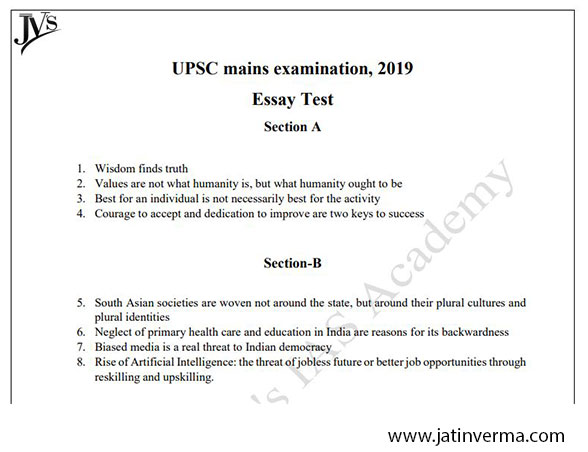
UPSC Mains 2019 question paper – Essay Test

Hello Aspirants,

UPSC mains examination, 2019 has commenced from today. and UPSC has conducted the essay test on the first day.

You can read the UPSC Mains 2019 question paper as given below or can download the PDF by using the link provided at the end.

UPSC mains examination, 2019 (Essay Test)

Preliminary exams admitted by UPSC are listed below. These documents will help you understand the model and strength of this exam.

UPSC Prelims 2019 Question Paper Download PDF

Reasons for Failure: 6 Main Reasons for Failure in IAS Exam

One of the common reasons for failing the IAS exam is to underestimate the importance of IAS prelims and to understand it throughout the qualifying exam. We are giving some information on why most of the candidates fail in the IAS Prelims itself.

IAS Exam 2020

The IAS exam is one of the most difficult examinations in the country. Normally a candidate dedicates four or five years of his life to become an IAS or IPS officer. Many candidates who dream of becoming IAS come to New Delhi. New Delhi is known for coaching centers and the exact environment of this exam.

Each year, out of 5 lakh candidates, only 15000 candidates are able to clear the IAS Prelims exam, it is not even 3% of the total students. These figures are really disappointing because 97% of their dreams are broken and dreams are lost. But these figures also show that most of the candidates miss out on the final list with a small margin. This shows that there is not much difference in IQ but there is a fundamental difference of approach between successful and failed candidate.

IA, IAS tries to investigate some common causes or mistakes in failure.

  1. Fear of failure

Some students are so scared about the results of the prelims exam that the IAS prelims exam gets nervous on the day. Their attention is diverted from what they studied throughout the year and how hard they have worked till the day of examination.

It is very common to feel nervous and scared during the exam but the best way to avoid them on the exam day is to take as many time-bound tests as possible before the exam and analyze your performance in terms of the type of questions. This will definitely help in reducing anxiety during the exam as you will gain so much confidence that you have not dropped out of the competition despite not knowing the exact answers to many questions.

2. Underestimate the importance of prelims

Many candidates believe that only the main exam of IAS (Main Examination) is the true test of knowledge and intelligence and IAS prelims is a qualifying examination. It is very important to break this myth as soon as possible because no one can reach the top without climbing the initial steps from the ground.

It is a fact that IAS Mains is a subjective exam which gives candidates more opportunity to prove their abilities through their answers but you will not be able to reach this opportunity if you fail in IAS prelims. The IAS Preliminary Exam is a true test of how well you have understood the subject as most of the questions are statement based.

The best suggestion would be to adopt a complementary approach in preparing for IAS. Start preparing with data and current passages and mark important facts as it will help you to solve objective type questions and the facts in main examination will help you to support your argument on current issues or topic.

3. Lack of time management during the exam

Time management is the loose end that you need to tighten by practicing the time-bound test as much as possible. You should also have time to revise the paper at least twice and change your answer if needed.

Set a target time for the time you need to read the question paper and mark the questions for which you are 110% sure about the answer. In IAS Prelims, on an average 40 questions out of 100 questions are such which are asked directly and which you can answer at once. The first phase should be completed as soon as possible. Try to solve as many direct questions as you can because it is the highest scoring part of the exam.

Now let’s get to the hit and trial game which is based on how well you remember the facts. This is the stage in which you have to try to solve the questions with 50% definite answers. It takes time and thinking, so first analyze the question and then answer it. If you have reached the 70th question then try to stop.

4. Test series not practiced

If you have not given a single test and are thinking that you will do very well in the actual exam, then you are living in confusion. There is a need to identify how you will react in the exam more than the examinations.

Sometimes giving regular tests is more important than reading different study materials because the materials are always infinite but your question paper is limited. Therefore you need to practice to master a certain number of questions in a given time.

Candidates need to understand that self-assessment before the actual examination will be a more intelligent decision than the exam to determine your performance and luck.

5. Study Material

UPSC study materials 2020

Reading the right material at the right time can work well for IAS prelims, but in such a situation, it can be disastrous not to choose where to study. There are many articles, tips and posts on the Internet about what kind of study material to use in the exam, but you also need to look at what you should not read.

Instead of wasting time reading the entire document of an entire yearbook or any government document, you can revise standard books and current events that are often in the news.

6. Revision

Any successful UPSC candidate will be able to tell how much revision of concepts is more important in preparing for IAS than reading new material. IAS aspirants must always remember that the only mantra for success in any examination is 3R – Read, Revise and Revise.

Most of the candidates who clear the exam are those who are always updated in the revision. They may not specialize in any subject, but they are correct and accurate in what they study. The axis of IAS prelims is based on memorization and analysis and both of these can be proved by revising as much as possible.

Conclusion

Instead of focusing on the process of becoming an IAS officer, most of the candidates are caught in the illusion of status and luxury. In a nutshell, it is important to decode the tricks of the first stage of the exam i.e., to be successful in the prelims exam before anyone can come to any conclusion on how to succeed in the IAS exam.

But candidates should remain motivated till they actually succeed in the Civil Services Examination. For most students, this is very difficult work. And with each passing year and with each failed attempt, the challenges become increasingly difficult.

As we get older, we start believing in ourselves. Previously, we could not know the hours we spent meditating. All friends also get busy in their lives. The people we grew up with have all made successful careers. However, if the candidate really wants to become a civil servant, then he has to intend to continue studies despite the defeat.

Download Study Materials: UPSC PRELIMS 2019 QUESTION PAPER PDF DOWNLOAD

UPSC Prelims Answer Key 2019

Best Graduate Course to Become An IAS

IAS is more than a job but an opportunity in which there are immense possibilities of social welfare. The importance of the IAS exam is increasing year by year, as evidenced by the increasing number of applications in it.

UPSC Exam 2020

IAS is an opportunity more than a job in which social welfare has immense potential. Extreme rights and freedom to work has made this job very popular. The importance of IAS exam is increasing year by year, the proof of which is the increasing number of applications in it. The IAS exam takes place in two stages and there are different strategies for preparing for both phases.

Many candidates in the stanza dream of joining the Indian Administrative Service right from their school days, and from that time they are committed to preparing for this prestigious civil service. This trend is seen increasing in the last two years. Even in IAS coaching institutes, even before attaining graduation qualification, candidates can be seen enrolling for IAS exam preparation.

IAS: As a Career

Candidates who have not yet chosen the stream of graduation, have a general curiosity in their mind that which subject should be kept in the graduate which is helpful in preparing for the IAS Exam and can fulfill the dream of passing this difficult exam. No one can simply answer this curious question of candidates devoted to the goal, in such a way that the basic academic qualification for the IAS exam is graduation and various optional subjects are available in the IAS exam, which makes this exam from any background. Makes the game of general opportunity for the coming candidates whether the candidate is from technical background or humanities.

Below we have tried to answer this question by highlighting the advantages and disadvantages of each subject in the light of choosing a subject eligible for IAS Exam

Social Science

The subject of humanities has traditionally been considered as a stronghold of the Civil Services Examination. If we look at the data mentioned in the annual report released by UPSC, we find that the success percentage of the candidates who opt for Humanities subject is higher than other subjects. In spite of this trend, the success ratio of candidates having humanities subject has decreased for some years. But in spite of all these factors, candidates from humanities background are being declared successful in large numbers.

Engineering

In the present circumstances we can clearly see that the success ratio of candidates from engineering background has increased a lot. If we look at the IAS toppers of the last few years, then it is clear that candidates from engineering background have dominance in this exam. Although the success ratio of candidates who opt for engineering subject as elective subject is less than other subjects, it is clear from the observation that toppers have succeeded only by choosing technical subject. In this way, if a candidate not only wants to succeed but wants to see himself standing in the queue of IAS toppers, then on the basis of election and hard work of this subject, he can join himself in the queue.

Science

A small but honorable number of science graduate candidates have been consistently successful in the IAS exam. However, their number is not so much that they can make an effective position in the subject elections for success. But in view of the increasing demand in scientific thinking and the bureaucratic system of technocrats, a slow and steady growth can definitely be seen.

Medical Science

The analogous medical science subject has not been considered as relevant in relation to the IAS exam. This is because very few people seeking this professional degree want to be part of the bureaucracy. But like the subject of Physics, the number of candidates of medical science background and success ratio is continuously increasing.

B.Com / MBA / BBA / CA / CS / CFA

All these degrees are considered professional in nature, so a small number of candidates from these areas are attracted to the IAS examination. But for the last few years we can definitely see an increase in the number of candidates from B.Com and MBA background. With the inclusion of CSAT (which focuses on logic, mathematics, data interpretation and decision making) in the IAS exam, candidates from B.Com and MBA backgrounds started thinking more seriously about the Civil Services Examination. In the coming days we should hope that their participation and success ratio will increase significantly.

The Conclusion

Absolutely after estimating past and present trends, it can be said that success in IAS depends only and only on the passion and interest of the candidate. Even in spite of choosing the streams and subjects that are said to be ideal for this exam, if you do not have a passion for the subject and preparation for the exam then it will not make any difference. With passion it is necessary that the subject you choose should be of your interest and inspire you to work hard. When it comes to preparing for the Civil Services Examination, there is no replacement for the hard work required for success in this exam.

Read More: Test Series for UPSC 2020 | UPSC Prelims 2020 | Daily Current Affairs

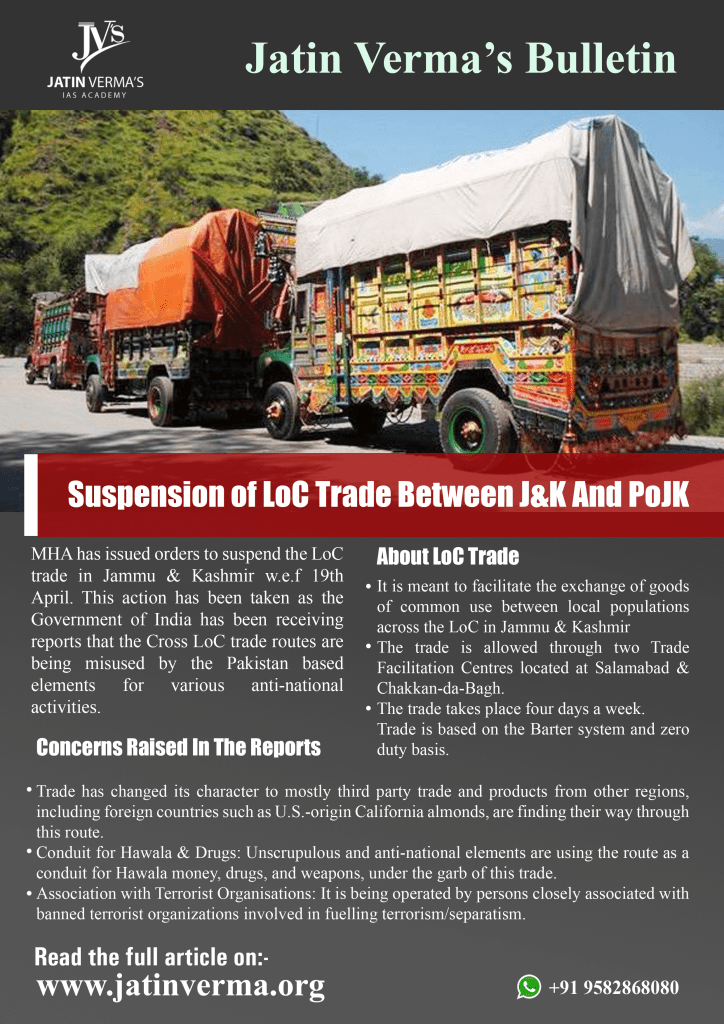
Suspension of LoC Trade Between J&K And PoJK

MHA has issued orders to suspend the LoC trade in Jammu & Kashmir w.e.f 19th April. This action has been taken as the Government of India has been receiving reports that the Cross LoC trade routes are being misused by the Pakistan based elements for various anti-national activities.

About LoC Trade

  • It is meant to facilitate the exchange of goods of common use between local populations across the LoC in Jammu & Kashmir
  • The trade is allowed through two Trade Facilitation Centres located at Salamabad & Chakkan-da-Bagh.
  • The trade takes place four days a week.
  • Trade is based on the Barter system and zero duty basis.

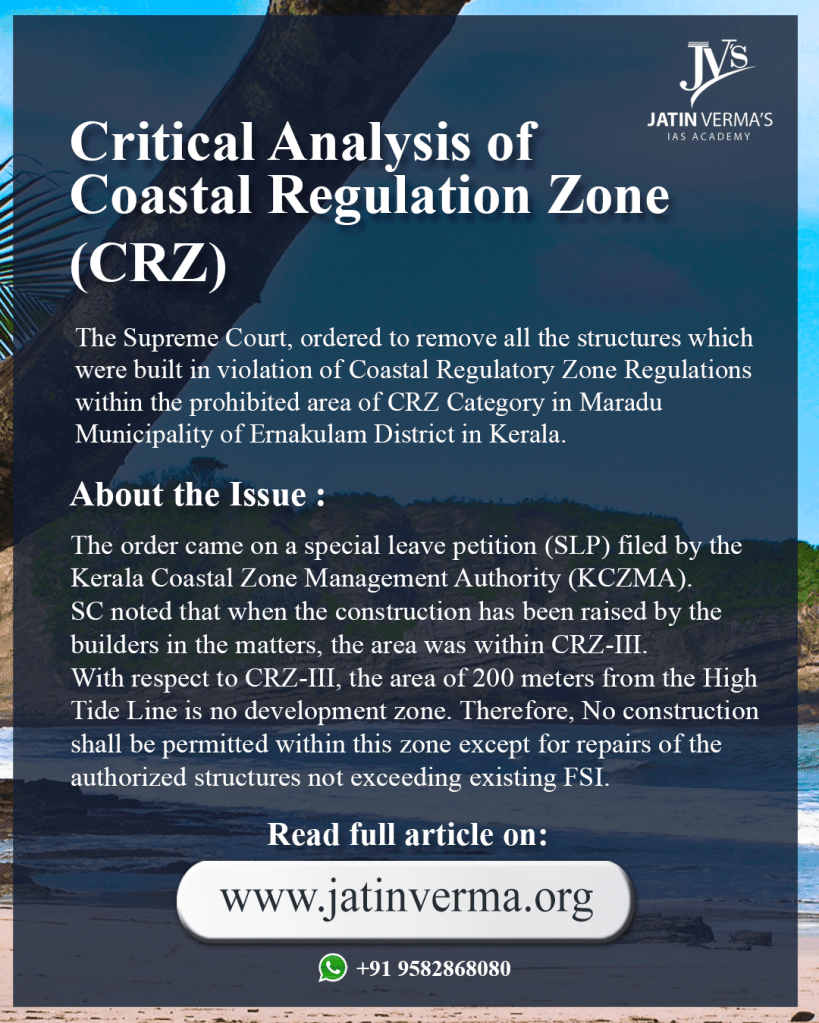
Critical Analysis of Coastal Regulation Zone (CRZ)

The Supreme Court, ordered to remove all the structures which were built in violation of Coastal Regulation Zone within the prohibited area of CRZ Category in Maradu Municipality of Ernakulam District in Kerala.

About the Issue :

  • The order came on a special leave petition (SLP) filed by the Kerala Coastal Zone Management Authority (KCZMA).
  • SC noted that when the construction has been raised by the builders in the matters, the area was within CRZ-III.
  • With respect to CRZ-III, the area of 200 meters from the High Tide Line is no development zone. Therefore, No construction shall be permitted within this zone except for repairs of the authorized structures not exceeding existing FSI.
  • The bench also took judicial notice of the floods faced by the state last year and observed that it had taken place ‘due to such unbridled construction activities resulting into colossal loss of human life and property’.
  • SC observed that the construction activities in the notified CRZ areas can be permitted only in consultation with and concurrence of the Coastal Zone Management Authority.

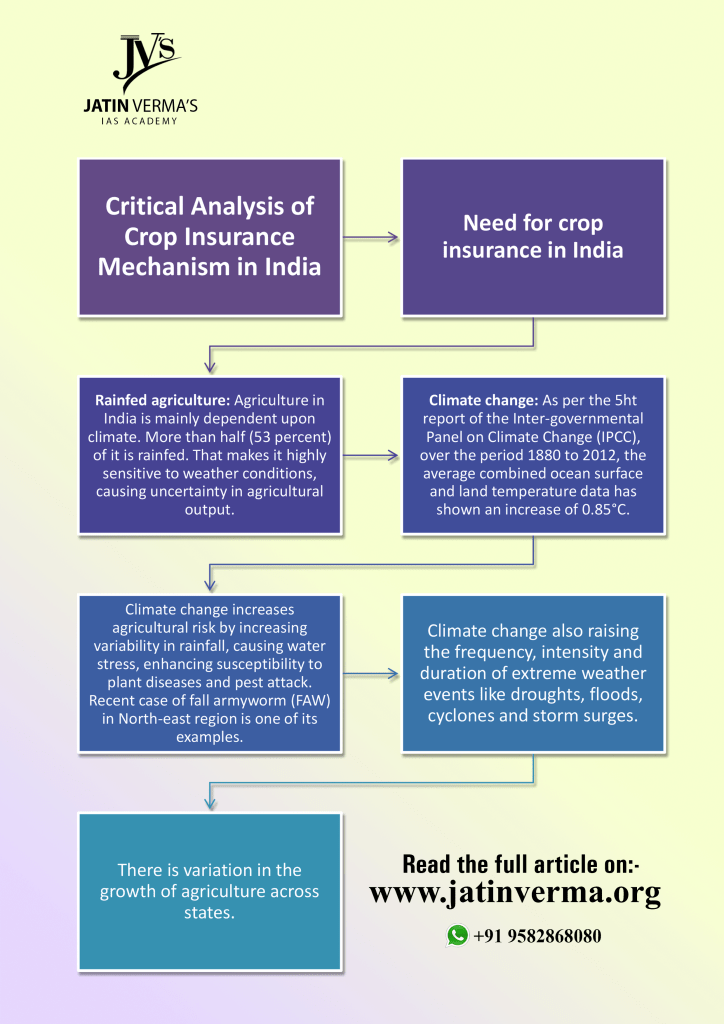
Critical Analysis of Crop Insurance Mechanism in India

Do you know more about the crucial analysis of crop insurance mechanism in India? The Farmers are usually exposed to organic vagaries, which negatively impact their agricultural production and farm incomes.

Among the very best methods to mitigate agricultural dangers arising from natural calamities is adoption of a strong insurance plan.

Need for crop insurance in India

  • Rain fed agriculture: Agriculture in India is mainly dependent upon climate. More than half (53 percent) of it is rain fed. That makes it highly sensitive to weather conditions, causing uncertainty in agricultural output.
  • Climate change: As per the 5ht report of the Inter-governmental Panel on Climate Change (IPCC), over the period 1880 to 2012, the average combined ocean surface and land temperature data has shown an increase of 0.85°C.
  • Climate change increases agricultural risk by increasing variability in rainfall, causing water stress, enhancing susceptibility to plant diseases and pest attack. Recent case of fall army worm (FAW) in North-east region is one of its examples.
  • Climate change also raising the frequency, intensity and duration of extreme weather events like droughts, floods, cyclones and storm surges.
  • There is variation in the growth of agriculture across states.
  • Types of risk to farmers: Due to all these factors, Farmers primarily face two types of risks – yield risk and price risk. An unplanned and major variation in either the yield or price of a crop in a particular agricultural cycle can translate into significant losses to the farmer.
    • Price risk refers to the uncertainty about prices that farmers receive for their produce. During years of high production, prices of crops slide downwards, affecting the incomes of farmers.
    • Yield risk refers to uncertainty regarding the quantity and quality of agricultural product harvested at the end of an agricultural cycle. Yield is mainly affected by the quantum of annual rainfall.

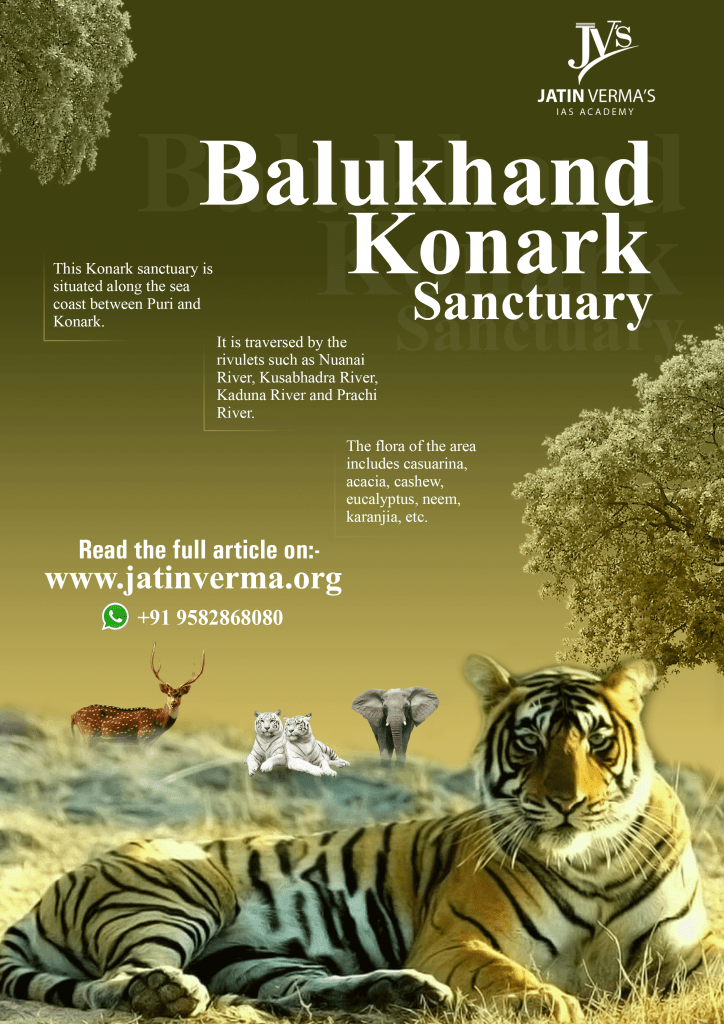
Balukhand-Konark Sanctuary

In this article, there are some points which tell about the backhand-Konark sanctuary

  • This Konark sanctuary is situated along the sea coast between Puri and Konark.
  • It is traversed by the rivulets such as Nuanai RiverKusabhadra RiverKaduna River and Prachi River.
  • The flora of the area includes casuarina, acacia, cashew, eucalyptus, neem, karanjia, etc.
  • The region is famous for the occurrence of a large number of blackbucks and spotted deer.
  • The prominent fauna also includes monkey, squirrel, jungle cat, hyena, jackal, mongoose and variety of birds and reptiles.
  • Olive Ridley Sea Turtles nest on the beaches.

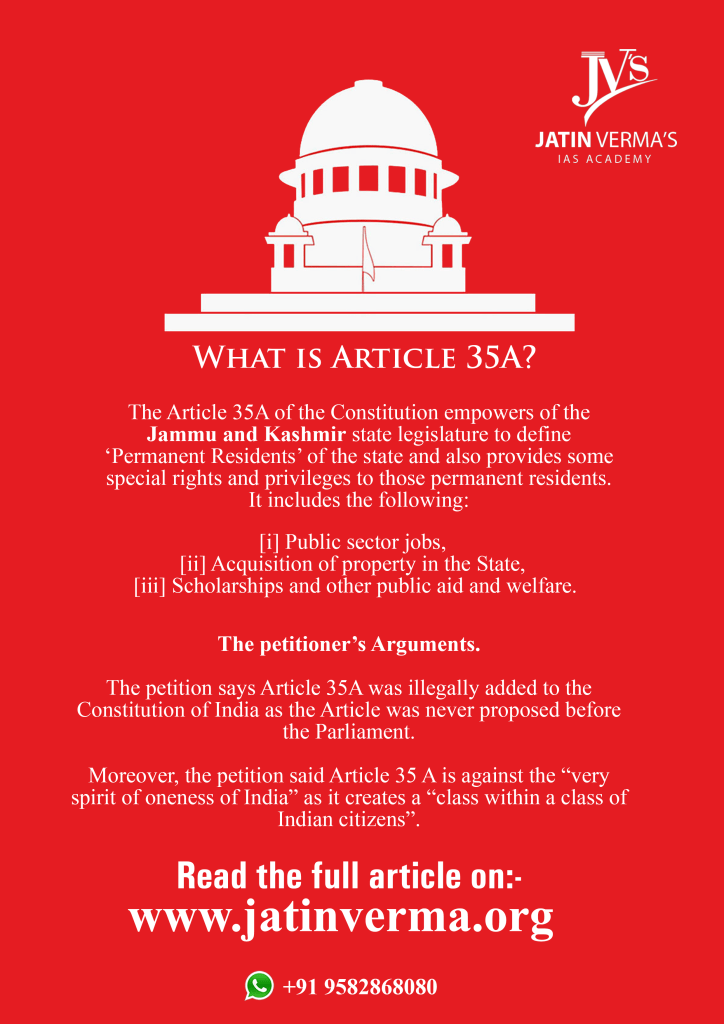
What is Article 35A

The Article 35A – the Constitution of India empowers of the Jammu and Kashmir state legislature to define ‘Permanent Residents’ of the state and also provides some special rights and privileges to those permanent residents. It includes the following:
[i]    public sector jobs, 
[ii]   acquisition of property in the State, 
[iii] scholarships and other public aid and welfare.

Background:

  • The article was added to the Constitution by a Presidential order in 1954 by the then President Rajendra Prasad on the advice of the Jawaharlal Nehru Cabinet.
  • The Presidential Order was issued under Article 370 (1) (d) of the Constitution. In fact, this provision allows the President to make certain “exceptions and modifications” to the Constitution for the benefit of ‘State subjects’ of Jammu and Kashmir.
  • Moreover, the provision mandates that no act of the legislature coming under it can be challenged for violating the Constitution or any other law of the land.
  • The controversial Constitution (Application to Jammu and Kashmir) Order of 1954 extended Indian citizenship to the ‘State subjects’ of Jammu and Kashmir.

A writ petition filed by NGO We the Citizens challenges the validity of Article 35A

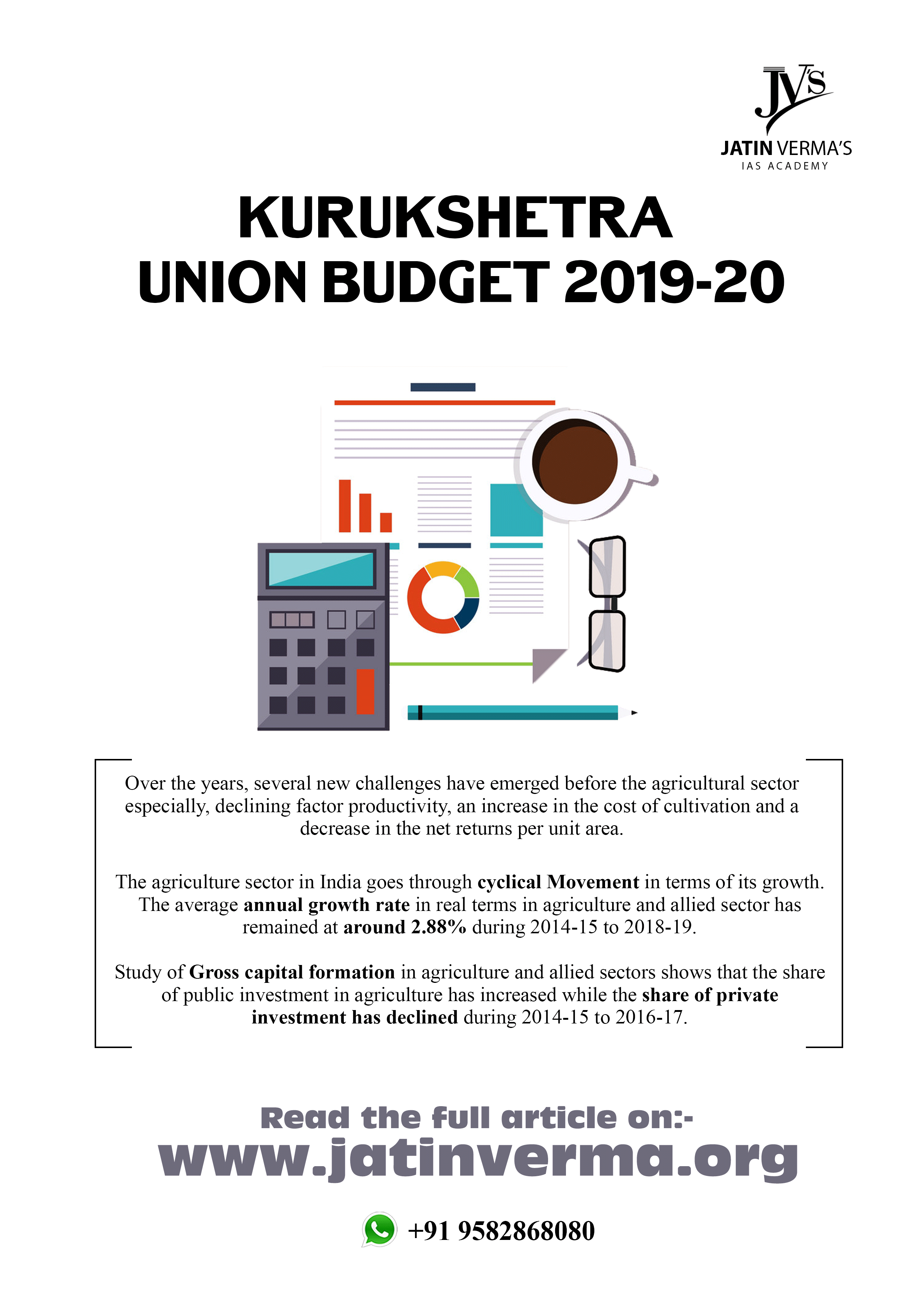
Kurukshetra Union Budget 2019-20

Kurukshetra Union Budget 2019-20, Rural Development and the Interim Budget 2019.

In terms of budgetary allocation for agriculture, there has been an increase of 80% in 2019-20 over 2018-19.

Over the years, several new challenges have emerged before the agricultural sector especially, declining factor productivity, an increase in the cost of cultivation and a decrease in the net returns per unit area.

  • The agriculture sector in India goes through cyclical Movement in terms of its growth. The average annual growth rate in real terms in agriculture and allied sector has remained at around 2.88% during 2014-15 to 2018-19.
  • Study of Gross capital formation in agriculture and allied sectors shows that the share of public investment in agriculture has increased while the share of private investment has declined during 2014-15 to 2016-17.

For a safe and food secure future the agriculture landscape has to undergo a tremendous transformation and shift from the philosophy of ‘Green revolution led’ productivity to ‘Green methods led’ sustainability in Indian agriculture.

  • Increasing sustainability in agriculture – In the revised guidelines of Paramparagat Krishi Vikas Yojana during the year 2018, various organic farming models like natural farming, Vedic farming, Homa farming, zero budget natural farming have been included wherein flexibility to adopt any model of organic farming lies on the states depending on the farmer’s choice.
  • Adopting appropriate Technologies for smallholder farm – The custom hiring centers are set up to promote the use of high tech machinery for the mechanization of small and marginal farmer holdings especially in difficult terrains.
  • Animal husbandry and Dairying – India ranks first in milk production, accounting for 20% of world production. But there exists a wide inter-state variability in milk production. All India per capita availability of milk is 375 grams per day it varies between 71 grams per day in Assam to 1120 grams per day in Punjab.
    • Rashtriya Kamdhenu Aayog has been proposed to set up to upscale sustainable genetic up-gradation of cow resources and to enhance production and productivity of cows.
  • Fisheries sector – India is the second-largest fish producer in the world with a total production of 13.7 million metric tonnes in 2018-19 of which 65% is from inland sector. Almost 50% of Inland fish production is from culture fisheries. Fish and fish product exports emerged as the largest group in agricultural exports.
    • separate Department of fisheries was created in February 2019.
    • The government has merged all the schemes of the fisheries sector into an umbrella scheme of Blue Revolution: Integrated Development and Management of Fisheries.
    • Fisheries and aquaculture infrastructure development fund has been approved.
    • Pradhan Mantri Matsya Sampada Yojana – to stablish a robust fisheries management framework by addressing critical gaps in the value chain.
  • MSP and food grains procurement – MSP is announced to give guaranteed prices and assured market to the farmers and protects them from price fluctuations.
    • Initiative like SFURTI & ASPIRE have been launched to give a boost to the traditional industries and improve the technology of such Industries.
  • Formation of 10,000 new Farmer Producer Organisations (FPOs) to ensure economies of sale for farmers over the next 5 years.
  • Agricultural credit – If credit is not available to purchase seeds at the time of sowing or if lack of credit delays the administering of fertilizers it can severely impact agricultural productivity.
    • Interest subvention of 2% per annum to lending institutions on use of their own resources has been offered.
    • An additional interest subvention of 3% per annum to such of those farmers repaying in time.

To attain sustainable development goals (SDGs) of ending poverty and bringing in inclusive growth, activities related to agriculture need to be closely integrated with the SDG targets.

Design a site like this with WordPress.com
Get started